
Curved Stairlifts
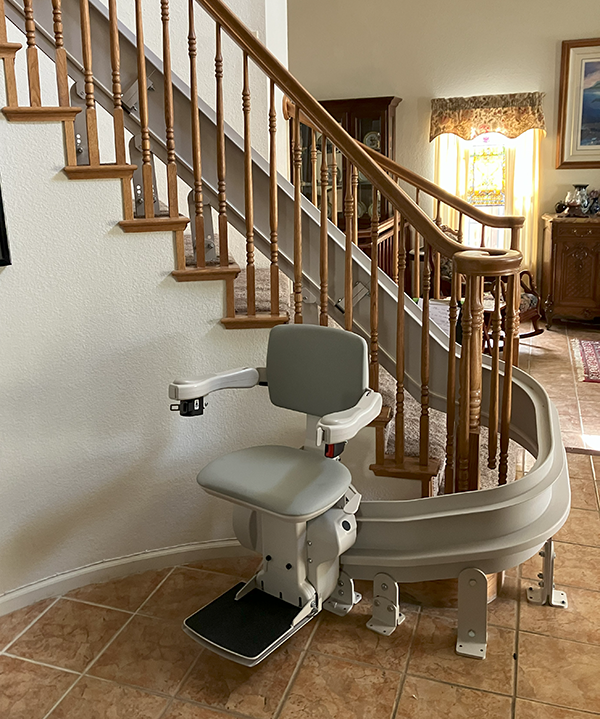
Bruno CRE-2110 Elite Curve Stairlift
- Attaches to stairs, not wall
- Made in USA
- Fast turnaround time
- Local installation and service crew
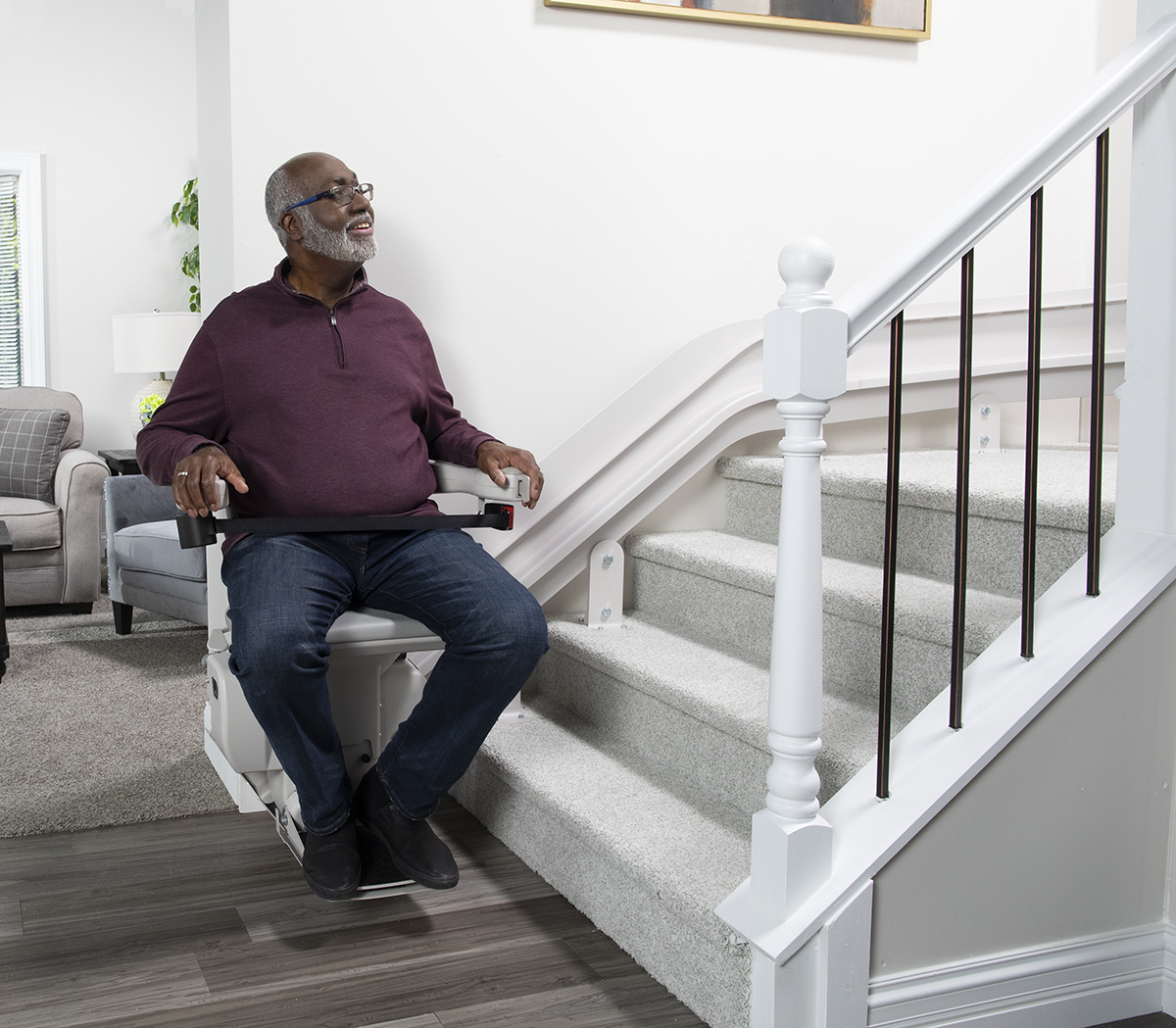
Heavy Duty
- 400 lb. Capacity
- Larger Seat, large footrest optional
- Optional Power Footrest/Swivel Seat
- 5-year motor/gearbox warranty
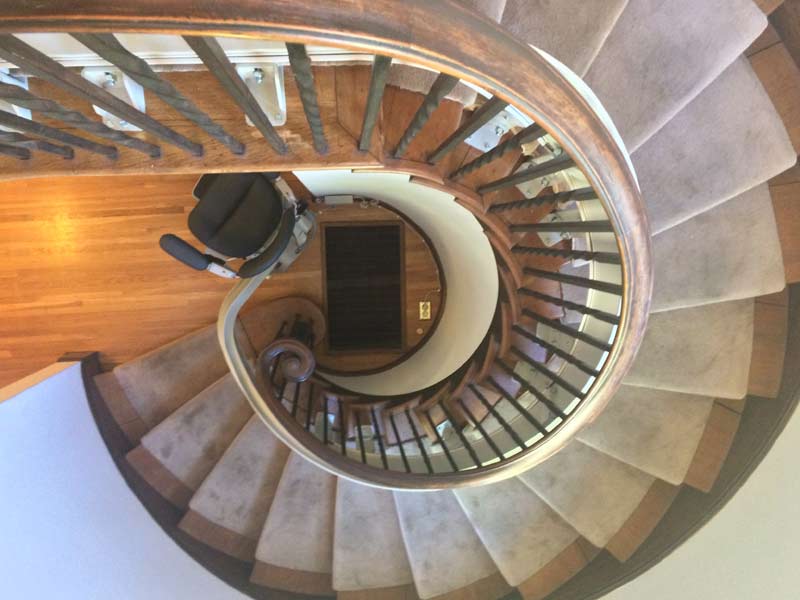
Custom-Made
- Fits nearly any staircase
- Digitally measured for exact fit
- Smooth, solid ride
- Clean, professional installation
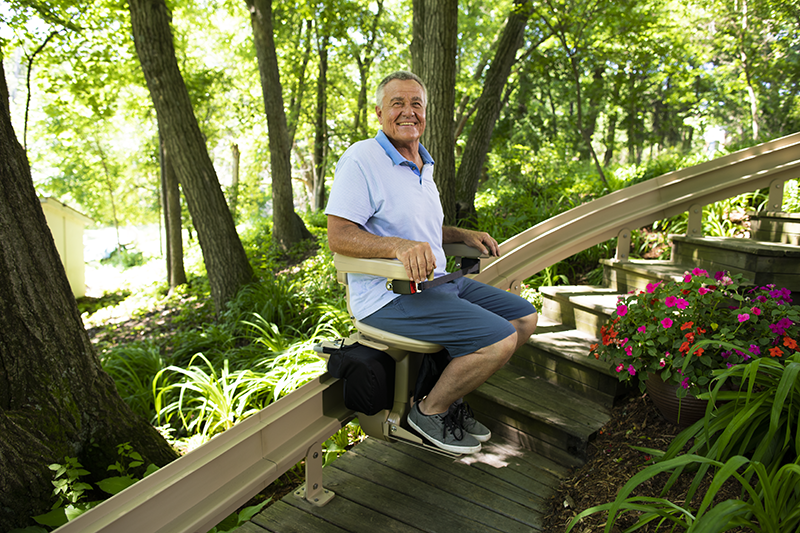
Contact us for a free estimate and stairlift pricing.
Contact Us
Curved Stairlifts installed in Northern California:
A curved stairlift installation is a job for a professional. With essential mobility equipment in your home, a company that knows what they're doing to install and service it is every bit as essential. Benchmark Home Elevator has been installing Bruno stairlifts since 2008, and each of our staff has extensive experience installing curved stairlifts back to the 90's.
A
curved
stairlift (stair lift, stair chair) actually refers to the rail or track that the chair rides on. It is a lift that can go around turns, landings, full spirals, or anything that isn't a straight uninterrupted run. It is almost always the safest solution to multi-flight stairways, and is sometimes the
only
safe option.
Our curved stairlifts are custom-made by Bruno Independent Living Aids in Wisconsin to fit your exact staircase.
Locally Owned and Operated:
We are proud to do all our own work. The only thing we don't do is manufacture the lift. Once our customer decides that it is time for a stairlift, we assist them in selecting the right configuration and available options. We then use Bruno's Picture Perfect camera system to perform a detailed staircase measurement. Then, Bruno Independent Living Aids custom-manufactures the Elite Curve to our specifications, and ships it to us in Napa. All installation, service, and any needed repairs are done by a professional with years of experience working for seniors in the Bay Area.We know how to minimize the impact on your home and prioritize your personal safety.